


Finnish Lapland or Swedish Lapland? Here s how they differ from a traveler ´ s perspective.
(Illustration image: ChatGPT)
Is Finnish or Swedish Lapland easier to reach? And once you arrive, should you stay in a hotel, apartment or private cabin?
The answer depends surprisingly much on how you want to travel. Finnish Lapland has a strong network of airports located close to major resorts. Swedish Lapland has something that many international visitors do not expect: trains that travel deep into the Arctic and continue all the way to mountain destinations close to the Norwegian border.
For travellers driving from continental Europe, Sweden is also more naturally connected to the European road network. Finland is usually reached by air, ferry or via northern Sweden.
When it comes to accommodation, however, the national border matters less. On both sides you can choose between hotels, holiday apartments, cabins, resorts and private accommodation. The bigger decision is often whether you want to stay in the middle of a resort or escape to a cabin surrounded by Arctic nature.
Read Part 1: Finnish Lapland vs Swedish Lapland – Culture, Everyday Life and Food
Which is easier to reach: Finnish or Swedish Lapland?
Finnish and Swedish Lapland have different transport strengths.
In Finnish Lapland, flying can take you remarkably close to your final destination. Airports in Rovaniemi, Kittilä and Ivalo serve some of the region's best-known resorts and travel areas, while seasonal direct flights connect Lapland with a growing number of European cities.
Swedish Lapland also has important airports, especially Luleå and Kiruna, but rail travel plays a much more visible role. You can board an overnight train in Stockholm and continue north through Kiruna and Abisko towards Björkliden and Riksgränsen.
In simple terms: Finnish Lapland is exceptionally convenient to reach by air, while Swedish Lapland offers one of Europe's most interesting ways to travel into the Arctic by train.
Flying to Finnish and Swedish Lapland
Finland has an unusually useful airport network for Arctic tourism. Finavia operates airports in Rovaniemi, Kittilä, Ivalo, Kuusamo and Kemi-Tornio.
Rovaniemi Airport is around 10 kilometres from the city centre. Kittilä Airport is only about 15 kilometres from Levi and approximately 35 kilometres from Ylläs. Ivalo Airport is around 25 kilometres from Saariselkä.
For travellers spending their holiday in a single resort, this can make Finnish Lapland surprisingly easy to visit without a long transfer after the flight.
Current airport and flight information is available from Finavia's Lapland Airports guide.
In Swedish Lapland, Luleå and Kiruna are the two main gateways, with regional airports including Gällivare and Arvidsjaur. Flights from Stockholm operate year-round, while seasonal international services connect the region with selected European cities.
See current connections on the Swedish Lapland flight guide.
Travelling to Lapland by train
In Finland, the overnight train is one of the classic ways to begin a Lapland holiday. Sleeper trains travel north to Rovaniemi, Kolari and Kemijärvi.
From these stations, travellers continue to ski resorts and other destinations by connecting bus, taxi or rental car.
Finland also has car-carrier night trains. This allows you to sleep in a cabin while your own car travels north on the same train – a useful combination if you want to avoid a long drive from southern Finland but still have a car available during your holiday.
More information is available from VR, Finland's national railway company.
Rail travel is even more central to the travel experience in northern Sweden. The night train from Stockholm continues through Kiruna and Abisko towards Björkliden and Riksgränsen, close to the Norwegian border.
That means travellers can step off the train directly into a high Arctic mountain environment. Regional trains also connect Luleå, Kiruna and Haparanda.
See the Swedish Lapland train guide for current information.
Can you travel between Finnish and Swedish Lapland by train?
Yes – and this became significantly easier in August 2026.
Passenger rail services between Oulu in Finland and Haparanda in Sweden began on 10 August 2026. The route has 28 weekly services and stops at Oulu, Kemi, Tornio East, Tornio and Haparanda.
Finnish and Swedish trains do not simply continue on the same railway network, so travellers heading further into Sweden normally change trains in the Haparanda area.
The connection is nevertheless important for international rail travellers because it links northern Finland with Sweden's rail network and creates a new overland route between Finnish Lapland and the rest of Europe.
Current information is available from VR's information on the Haparanda connection.
Driving to Lapland from continental Europe
For a European road trip, geography gives Swedish Lapland an advantage.
Sweden is connected to Denmark and the continental European road and rail network. Travellers can drive north through Sweden and follow the E4 along the Gulf of Bothnia towards Luleå, Haparanda and the Finnish border.
Finland is separated from most of continental Europe by the Baltic Sea. Travellers bringing their own car can drive through Sweden and cross into Finland at Tornio, or use one of several Baltic ferry routes.
For example, Finnlines operates a daily ferry between Travemünde in Germany and Helsinki. The crossing takes around 30 hours.
See current schedules at Finnlines Travemünde–Helsinki.
A road trip through northern Sweden and Finland can also be an interesting way to experience both Laplands on one journey, crossing the border through Haparanda and Tornio.
Do you need a car in Lapland?
Not always.
If you stay in central Rovaniemi or in the heart of a major ski resort, airport buses, taxis, organised transfers and activity companies can make a rental car unnecessary.
The same applies to some Swedish mountain destinations reached directly by train.
A car becomes much more useful when your cabin is several kilometres from the nearest supermarket, restaurant or transport connection, or when you want to explore several destinations during the same holiday.
Distances in the Arctic are easy to underestimate. Two places that look close on a map may still be tens or even hundreds of kilometres apart.
Before booking accommodation, always check how you will get there from the airport or railway station and how far the nearest everyday services are.
What types of accommodation are available in Finnish and Swedish Lapland?
Both regions offer a broad range of accommodation: hotels, apartments, holiday villages, hostels, private cabins and more remote wilderness-style stays.
Hotels are often the easiest choice for short trips, especially for travellers who want breakfast, restaurants, reception services and organised activities close at hand.
A holiday apartment offers more independence. A kitchen and additional living space can make a longer stay easier while still allowing you to remain in the centre of a resort.
A private cabin offers a different experience. It can provide more space, privacy and direct contact with nature, making it particularly attractive to families and groups of friends.
In Finnish Lapland, a private sauna is also a common and important feature of many holiday cabins and apartments.
Hotel or cabin in Lapland?
A hotel may be the better choice if you are staying only a few nights, travelling without a car, want breakfast and restaurants on site or plan to spend most of your time on organised excursions.
A cabin or holiday home may be the better choice if you are travelling with family or friends, want to prepare some of your own meals, value privacy and a sauna, or plan to stay for several days or a full week.
The real advantage of a cabin is not necessarily a lower nightly price. It is flexibility.
Breakfast has no timetable. Ski clothes can dry overnight. Children and adults can keep different routines. You can cook when you want and end the evening in your own sauna rather than organising the day around hotel services.
Where can you book a cabin in Finnish Lapland?
Accommodation can be booked directly from owners, through resort booking services, international accommodation platforms and local Finnish agencies.
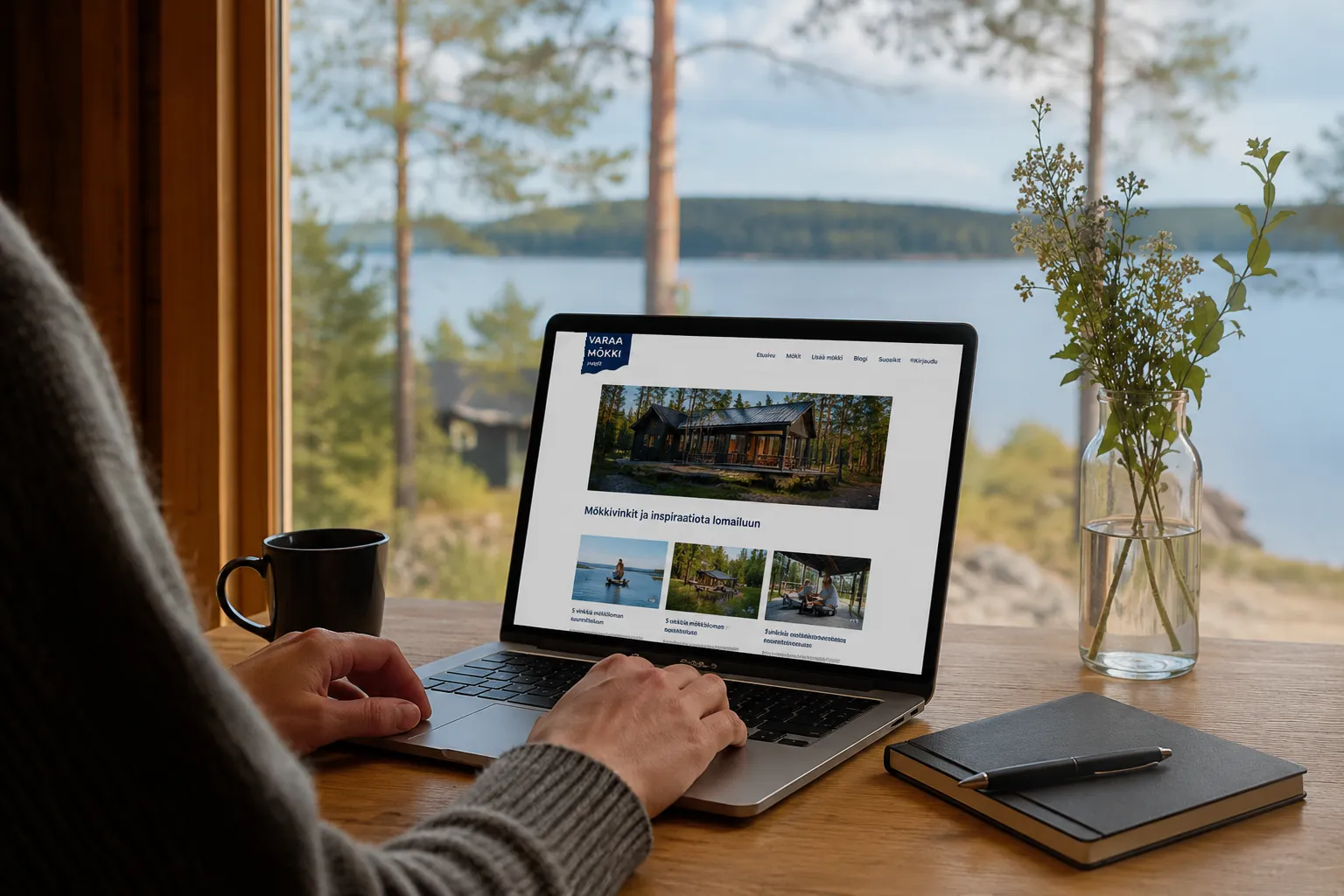
One Finnish booking option is Varaamokki.com, which offers privately owned holiday cabins and apartments in Finnish destinations including Levi, Ruka, Ylläs, Suomu and Saariselkä.
In Swedish Lapland, accommodation is similarly available through hotels and resorts, local cabin and destination booking services and international platforms.
Whichever booking channel you use, check the details carefully. Important questions include the exact location, transport connections, number of real beds, linen, final cleaning, sauna, parking and the distance to supermarkets and restaurants.
Is Finnish or Swedish Lapland cheaper?
There is no reliable one-word answer.
Prices depend more on the destination, season, accommodation standard and booking date than on the national border itself. Christmas, New Year and peak winter holiday weeks can be expensive in both countries.
The size of your group also changes the calculation. A hotel may make sense for two travellers, while a large cabin shared by six or eight people can produce a very different cost per person.
Compare the total cost of the holiday rather than only the nightly room price. A cabin kitchen may reduce restaurant spending, but a remote location may increase rental car and transport costs.
Finnish or Swedish Lapland for travel and accommodation?
Finnish Lapland's great practical strength is air access. Several major destinations are located surprisingly close to an airport.
Swedish Lapland's distinctive advantage is rail travel. You can travel overnight from Stockholm and continue far into the Arctic mountains towards Abisko and Riksgränsen.
For travellers driving from continental Europe, Sweden is more naturally connected to an overland route. Finland is more often reached by air, ferry or via Sweden.
Accommodation itself is more similar than different. Both sides offer hotels, apartments and cabins ranging from resort-centre convenience to complete Arctic solitude.
The best choice is therefore not simply Finland or Sweden. First decide what kind of Lapland holiday you want.
Frequently asked questions about travelling to Finnish and Swedish Lapland
1. Is Finnish or Swedish Lapland easier to reach?
It depends on your starting point and travel style. Finnish Lapland is particularly convenient by air, while Swedish Lapland has excellent long-distance rail access.
2. Which Lapland is easier to fly to?
Finnish Lapland has airports close to major destinations such as Rovaniemi, Levi, Ylläs and Saariselkä. The main air gateways to Swedish Lapland are Luleå and Kiruna.
3. Can you travel between Finnish and Swedish Lapland by train?
Yes. Passenger trains between Oulu and Haparanda began operating in August 2026. Travellers continuing onto the Swedish rail network normally need to change trains.
4. Can you travel from continental Europe to Lapland entirely by train?
Swedish Lapland can be reached by combining rail connections through Denmark and Sweden. The new Haparanda–Oulu service also makes it possible to continue by rail into Finland.
5. Do you need a rental car in Lapland?
Not necessarily. Many resorts and towns can be visited without a car, but a car is useful for remote cabins and for travellers planning to explore several locations.
6. Is a hotel or cabin better in Lapland?
Hotels are convenient for short stays and car-free trips. Cabins are often attractive for families and groups who want more space, a kitchen, privacy and often a private sauna.
7. Where can I book a cabin in Finnish Lapland?
Options include Varaamokki.com, resort booking services, direct bookings and international accommodation platforms.
8. Is Finnish or Swedish Lapland cheaper?
Neither is consistently cheaper. Prices vary considerably by destination, season, accommodation type, group size and how early you book.
9. Which Lapland is better without a car?
Both have good car-free options. Finland has resorts close to airports, while Sweden has the advantage of trains reaching several northern mountain destinations.
10. How do I get from the airport or railway station to my accommodation?
Depending on the destination, options include airport buses, connecting coaches, local buses, taxis, rental cars and transfers organised by hotels or activity companies. Always check the final connection before booking accommodation.
In Part 3 of this series, we compare skiing and winter holidays in Finnish and Swedish Lapland: ski resorts, vertical drops, cross-country skiing, services and which destinations suit families, beginners and more experienced skiers.
‹ Takaisin
Julkaistu 21.09.2026