

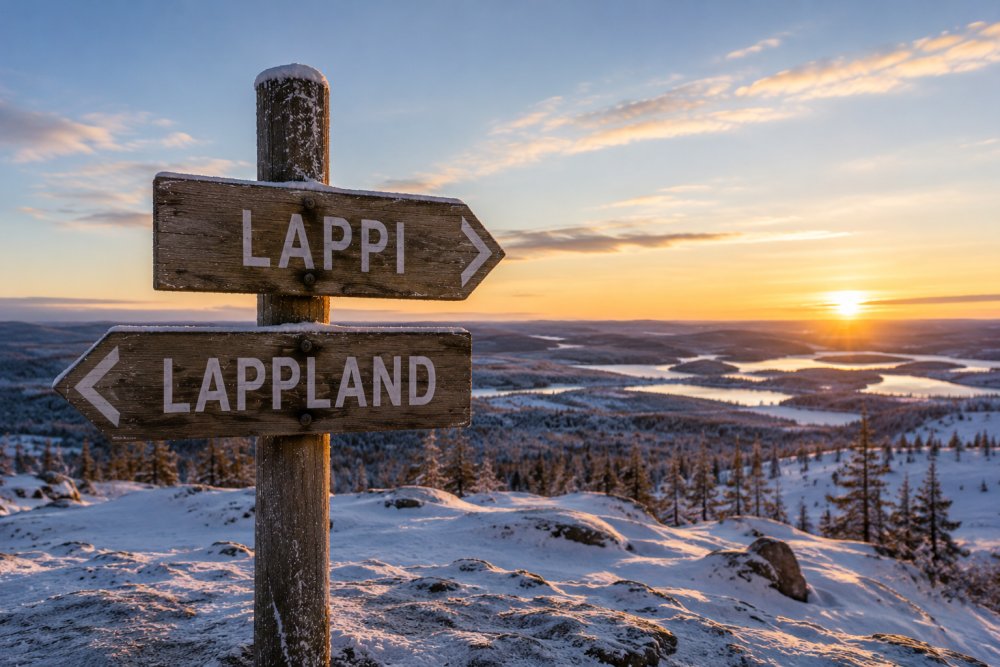
Finnish Lapland or Swedish Lapland? Here s how they differ from a traveler ´ s perspective.
(Illustartion image: ChatGPT)
Cross the border from Finnish Lapland into Swedish Lapland and, at first, surprisingly little seems to change. Cross the border from Finnish Lapland into Swedish Lapland and, at first, surprisingly little seems to change. The forests continue, winters are long, reindeer may still appear on the road and in summer the sun barely leaves the horizon. Yet within minutes, a traveller begins to notice that this is another country.
The language changes. The currency changes. Supermarket chains, petrol stations, road signs and familiar brands look different. Travel west across Swedish Lapland and the landscape changes too, gradually rising from forests and rolling fells towards the Scandinavian mountain range along the Norwegian border.
Finnish and Swedish Lapland are a fascinating example of two northern regions that share history, Arctic nature and Sámi heritage while still creating noticeably different travel experiences.
In Part 1 of this series, we compare Finnish and Swedish Lapland through culture, everyday travel and food. Later parts will look at getting there, accommodation, ski resorts, nature, driving, EV charging, safety and, ultimately, which side of Lapland may suit different types of travellers best.
What do we mean by Swedish Lapland?
The term Swedish Lapland can mean slightly different things depending on context. In this series, we use it from a traveller’s perspective and mainly refer to the Swedish Lapland destination region: Sweden’s northern Arctic travel area stretching from the Gulf of Bothnia coast to the far northern mountains.
What is the biggest difference between Finnish and Swedish Lapland for a traveller?
The short answer is that the two regions feel culturally familiar but geographically different.
The area that is now Finland was part of the Kingdom of Sweden for more than six centuries, until 1809. That long shared history still helps explain many similarities in society, culture and everyday life.
Language is the most obvious difference. Swedish is the main language of Sweden. Finland has two national languages, Finnish and Swedish, although Finnish is by far the most common everyday language in Finnish Lapland. The linguistic map of the north is more complex than the national border suggests: Finnish and Meänkieli are also spoken in northern Sweden, while Sámi languages belong to the cultural landscape on both sides of the border.
The Torne Valley is the clearest example. The neighbouring towns of Tornio in Finland and Haparanda in Sweden function almost like one cross-border urban area. Further north, the Torne River separates two countries without creating a complete cultural divide.
For travellers, the border is often most visible in small details. Supermarkets change, petrol station brands change, restaurant names change and road markings look slightly different. Finland uses the euro, while Sweden uses the Swedish krona. The landscape may still look almost identical, yet everyday life suddenly feels subtly different.
Geography creates a bigger contrast as you travel west. Finnish Lapland is characterised by forests, wetlands, lakes and rounded fells shaped on very old bedrock. Eastern Swedish Lapland can look remarkably similar, but towards Norway the terrain becomes dramatically more mountainous as it reaches the Scandinavian Mountains.
The extremes of Arctic light, long winters and the midnight sun unite both regions. The setting in which you experience them can be very different: Finnish Lapland often feels like a landscape of forests, lakes and open fells, while western Swedish Lapland can offer higher mountains and broad alpine valleys.
Neither is better. They are simply two different ways to experience the same European north.
Finnish Lapland vs Swedish Lapland at a glance
Landscape
Finnish Lapland: forests, lakes, wetlands and rounded fells.
Swedish Lapland: similar forest and fell landscapes in the east, increasingly high and mountainous terrain towards Norway.
Language
Finnish Lapland: mainly Finnish, with Sámi languages and some Swedish.
Swedish Lapland: Swedish, with Sámi languages, Meänkieli and Finnish also present in the north.
Currency
Finnish Lapland: euro.
Swedish Lapland: Swedish krona.
Food
Finnish Lapland: inland lakes, reindeer, game, potatoes, flatbreads, dairy products and forest berries feature strongly.
Swedish Lapland: many of the same Arctic ingredients, combined with a stronger Gulf of Bothnia coastal influence and distinctive Swedish bread and cheese traditions.
Shared cultural foundation
Both regions: Nordic society, centuries of shared history and Sápmi, the traditional cultural region of the Sámi people, which crosses modern national borders.
The border appears in surprisingly small details
Drive from Tornio to Haparanda and the natural environment does not suddenly transform. The Torne River does not change the weather, forests or daylight. Yet within a few minutes you are surrounded by another language, another currency, different retail chains and different everyday brands.
That is one reason this comparison is so interesting. The difference between Finnish and Swedish Lapland is not always dramatic. It is often created by dozens of small details.
For a Finnish traveller, even visiting a Swedish supermarket can feel like a small travel experience. For an international visitor, crossing the border offers a particularly clear example of how two Nordic countries can feel both extremely similar and unmistakably different at the same time.
In the Torne Valley, the national border is also younger than many of the region’s cultural traditions. Languages, family ties, fishing traditions and food culture developed long before today’s frontier. The same idea applies on a much larger scale to Sápmi.
Sápmi connects the north of Finland and Sweden
Sápmi is the traditional cultural region of the Sámi Indigenous people. It extends across northern parts of Finland, Sweden and Norway and into Russia’s Kola Peninsula. Finnish and Swedish Lapland therefore cannot be understood only through modern national borders.
Sámi languages, reindeer herding, fishing, handicraft traditions and generations of knowledge about the northern environment have shaped the region for far longer than the present borders have existed.
For travellers, it is also important to remember that Sámi culture is not a tourism theme or decoration. It is a living Indigenous culture. This shared heritage is especially visible in food.
Does Finnish Lapland taste different from Swedish Lapland?
Food is an essential part of travel, and the basic Arctic pantry is remarkably similar on both sides of the border. Reindeer, fish, game, potatoes, berries and wild ingredients are important in both Finnish and Swedish Lapland.
Crossing the border does not replace one northern cuisine with another. Instead, geography, history and local traditions influence how similar ingredients are prepared and served.
Sápmi is one of the strongest links between the two. Reindeer, fish, game, berries and wild plants have important roles in Sámi food traditions, although local dishes and preparation methods vary across the vast region.
Swedish Lapland has an additional geographical dimension: the Gulf of Bothnia coast. The Swedish Lapland destination includes mountains, forests, rivers and coastline. Inland and mountain food traditions feature reindeer, game and cold-water fish, while the coast adds whitefish, salmon and the famous Kalix Löjrom, or Kalix vendace roe. Swedish bread, dairy and cheese traditions also add their own character.
Finnish Lapland has a short Bothnian Bay coastline around Kemi and Tornio, but many of its best-known travel destinations lie inland. Travellers are therefore especially likely to encounter lake and river fish, reindeer, game, potatoes, barley, rye, dairy products and forest berries.
Around Inari, Arctic char, whitefish and vendace are important local fish. Among the most recognisable dishes served to visitors in Finnish Lapland are sautéed reindeer with mashed potatoes and lingonberries, and warm Finnish squeaky cheese, leipäjuusto, served with cloudberries.
Sámi food crosses national borders
Sápmi does not follow modern state borders, and neither does its food culture. Reindeer, ptarmigan, Arctic char, whitefish, cloudberries and wild plants are part of northern food traditions in both Finland and Sweden.
Traditionally, many different parts of the reindeer have been used, and drying, salting and smoking have been important preservation methods in the Arctic environment.
Suovas is a good example of a food that crosses national borders. It is salted and lightly smoked reindeer meat associated with Sámi food culture rather than with Sweden alone. In Swedish Lapland, travellers may encounter it fried and served with gáhkku, a soft Sámi flatbread.
On the Finnish side, the reindeer dish international visitors are most likely to recognise is poronkäristys, sautéed reindeer traditionally served with mashed potatoes and lingonberries.
The similarity is more interesting than trying to decide which country owns a particular food. Many northern ingredients, dishes and preservation traditions are older than the borders themselves.
Regional differences matter as much as national ones
Lapland’s food culture should not be divided only into Finnish and Swedish categories. Differences between east and west, coast and inland, and south and north can be just as important.
In the Torne Valley, food traditions continue naturally across the national border. Fish, potatoes, local breads and everyday dishes belong to a shared cultural heritage on both sides of the river.
In eastern Finnish Lapland and around Inari, large lakes, cold-water fish, game, berries and Sámi and Skolt Sámi traditions add their own character. Arctic char, whitefish and vendace from Lake Inari offer travellers a direct taste of the local environment.
Further south, farming and livestock have allowed potatoes, barley and dairy products to play a larger role. On the Swedish side, the coast and Västerbotten add strong bread, dairy and cheese traditions.
In the northernmost fell and mountain areas, food culture has relied more strongly on reindeer herding, fishing, hunting and gathering. Reindeer, ptarmigan, Arctic char, cloudberries and wild herbs connect the plate directly to the landscape.
What should travellers taste in Finnish Lapland?
Poronkäristys: sautéed reindeer served with mashed potatoes and lingonberries.
Kampanisu: a traditional decorative Lapland pastry often served with coffee.
Arctic char and whitefish from the Inari region: served fresh, smoked or prepared in local styles.
Leipäjuusto with cloudberries: warm Finnish squeaky cheese served with cloudberry jam or berries.
What should travellers taste in Swedish Lapland?
Kalix Löjrom: protected vendace roe from the northern Gulf of Bothnia, often served with accompaniments such as sour cream, onion or potato.
Pitepalt: a potato dumpling particularly associated with the Piteå region, traditionally filled with pork.
Suovas with gáhkku: lightly smoked reindeer served with soft Sámi flatbread.
Västerbottensost: a distinctive mature cheese produced in Burträsk in Västerbotten and one of northern Sweden’s best-known food products.
The same Arctic pantry, served a little differently
In the end, Finnish and Swedish Lapland have more in common on the plate than they have separating them. Arctic ingredients, strong seasons and a long tradition of using what the local environment provides have shaped food culture on both sides of the border.
The differences come from geography and from national, regional and local traditions. Swedish Lapland adds a strong coastal dimension and recognisably Swedish food traditions. Finnish Lapland’s visitor experience is more often centred on inland lakes, reindeer dishes, flatbreads, potatoes and Finnish dairy traditions.
Sámi food culture reminds us that the north existed long before today’s borders.
Neither side tastes better. They taste like the same north – served a little differently.
Coming in Part 2
In the next part of the series, we compare how easy Finnish and Swedish Lapland are to reach and what kinds of accommodation are available. We will look at flights, trains, driving, onward connections, hotels, holiday villages, cabins and private accommodation – and when renting your own cabin may be the best choice.
‹ Takaisin
Julkaistu 18.08.2026