


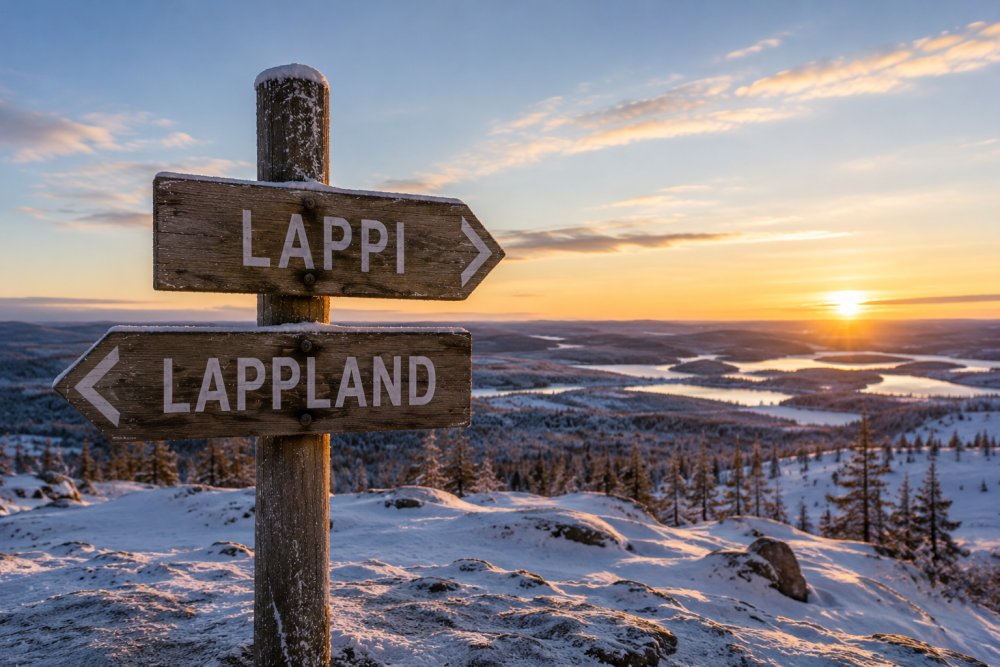
Finnish Lapland or Swedish Lapland? Here s how they differ from a traveler ´ s perspective.
(Illustration image: ChatGPT)
BLOG SERIES, PART 3 Finnish and Swedish Lapland for skiing and year round outdoor travel
Finnish and Swedish Lapland can offer very different ski holidays even though both regions share long winters, snow-covered fells and Arctic light. Finland’s largest resorts are often easy, service-rich holiday destinations where slopes, restaurants, cabins and activities are close together. In western Swedish Lapland, skiing is more closely connected with higher fells, mountain scenery and a stronger sense of wilderness.
The short answer: Finnish Lapland is often the easier choice for a convenient and varied family holiday. Swedish Lapland becomes especially attractive when mountain scenery, overnight trains, quiet surroundings or more demanding terrain matter most.
In Part 3 of this blog series, we compare ski resorts, slopes, cross-country skiing and other winter activities in Finnish and Swedish Lapland. We also look beyond winter at hiking routes, autumn colours, fishing, hunting, snowmobiling, mountain biking and major outdoor events. Finally, we look at which destinations suit families, beginners, experienced skiers and travellers who prefer to avoid renting a car.
Read Part 1 on culture, everyday life and food and Part 2 on getting there and accommodation.
Finnish and Swedish ski resorts at a glance
There is no single winner between Finnish and Swedish Lapland. Resorts differ greatly even within the same country. Still, international travellers can see a few useful patterns when planning a winter holiday.
| Comparison | Finnish Lapland | Swedish Lapland |
|---|---|---|
| Landscape | Forests, rounded fells and generally moderate vertical drops | Forests and fells in the east, higher fells and mountain scenery towards Norway |
| Resort character | Convenient, service-rich holiday resorts | Small mountain destinations, ski villages and more remote options |
| Family holiday | Many beginner areas, ski schools and activities | Good options, but the destination needs more careful selection |
| Advanced skiing | Varied pistes and terrain parks, but lower vertical drops | More mountain terrain and freeride possibilities in the west |
| Cross-country skiing | Extensive groomed networks through forests and fells | Fell and mountain routes with a more open wilderness feel |
| Access | Airports close to several major resorts | Night trains reach a number of northern mountain destinations |
Ski resorts in Finnish Lapland
Levi is built for an easy all-round holiday
Levi is one of Finland’s best-known ski resorts and a useful example of a service-rich Lapland destination. It offers slopes for different abilities, ski school, equipment rental, restaurants and a large choice of accommodation close to services. A Levi ski holiday is also easy to combine with Northern Lights tours, husky and reindeer experiences, and a private cabin with a sauna.
First-time visitors can start around the front and family areas before exploring more of the fell. Check the official Levi slopes and lifts information and the Levi Ski School before booking.
Ylläs combines downhill skiing with long cross-country routes
Ylläs is one of Finland’s largest ski destinations and a strong option for travellers who want downhill skiing alongside extensive cross-country trails and a less urban resort atmosphere. The destination has bases on both sides of the fell, around Ylläsjärvi and Äkäslompolo, which affects accommodation, restaurants and local transport.
Ylläs is particularly appealing to cross-country skiers and visitors who value space and nature. The official Ylläs Ski Resort website is the right place to check current lift, slope and ticket information.
Ruka offers a long season and a complete resort experience
Ruka, near Kuusamo, is a familiar winter destination for many travellers arriving from southern Finland and abroad. Its strengths include a long season, varied slopes, family services, evening skiing and a village where accommodation, restaurants and activities are close together. It is easy to spend an entire holiday in Ruka without planning a separate excursion every day.
Ruka works for beginners as well as experienced skiers when you choose the terrain that matches your ability. See the official Ruka Ski Resort website and the current slope map and opening hours.
Pyhä adds fell scenery and more demanding terrain
Pyhä is smaller than Levi or Ruka, but it has a clear identity. Located next to Pyhä-Luosto National Park, it is easy to combine skiing with fell nature, cross-country skiing and a quieter holiday rhythm. Pyhä also has family and beginner areas, while some slopes and natural-snow terrain appeal to more experienced skiers.
Pyhä can suit travellers who want services close by without the atmosphere of a large resort. Check the official Pyhä Ski Resort website and current slope, lift and opening-hour information before travelling.
Ski resorts in Swedish Lapland
Riksgränsen is a mountain-oriented ski destination
Riksgränsen is the clearest Swedish Lapland option for travellers seeking higher mountain scenery, natural snow and more demanding skiing. Close to the Norwegian border, it feels different from Finland’s large resort villages and places mountain conditions at the centre of the experience.
Wind, snow and weather can have a strong effect on operations. Check the official Riksgränsen website and the current winter opening information before committing to travel dates.
Björkliden combines skiing with mountain scenery
Björkliden lies close to Abisko and Riksgränsen. It suits travellers who want skiing alongside mountain views, hiking, quieter accommodation and a more open Arctic setting. Its railway station is part of the appeal: travellers can arrive by train, which makes a rental car less essential than it would be for a remote cabin.
The resort’s own website brings together accommodation, ski services and travel information. Check the current Björkliden opening hours before booking.
Dundret is a smaller and more local option
Dundret, just outside Gällivare, shows another side of Swedish Lapland skiing. It is smaller and less resort-centred than Levi or Ruka, but the fell is close to town and the atmosphere is quieter. Dundret can work well for travellers who want skiing, Northern Lights and other winter activities without a large destination resort.
See the official Dundret Gällivare website and the current lifts and slopes page before travelling.
Fells or mountains
The most useful difference between the two countries is not the border itself, but the change in terrain. Finland’s major resorts are generally set in forest and fell landscapes. Eastern Swedish Lapland can look very similar, while the region around Kiruna, Abisko, Björkliden and Riksgränsen approaches the Scandinavian Mountains.
For travellers, this affects vertical drops, wind, snow conditions and the shape of the whole ski day. In Finland, a day on the slopes is often easy to combine with restaurants, family attractions and other resort services. In Swedish mountain destinations, the landscape and weather can be a larger part of the experience.
This does not mean that every Swedish resort is difficult or that Finnish Lapland is only for beginners. Each resort should be checked individually. The Visit Sweden skiing guide gives a broader view of skiing in Sweden, while the Finnish ski resort overview at Ski.fi is useful for comparing Finnish centres.
Which Lapland is better for families
For families, the largest vertical drop is rarely the most important factor. Beginner slopes, ski school, equipment rental, short transfers, warm indoor breaks and accommodation close to services usually matter more.
Finland’s larger resorts are often straightforward choices. Levi, Ruka, Ylläs and Pyhä all offer family areas and plenty to do when not everyone wants to ski. Swedish Lapland also has family-friendly options, but mountain destinations require more attention to weather, distances and the level of services on site.
If your family enjoys train travel, a destination such as Björkliden can make the journey part of the holiday. If you want a large choice of restaurants, activities and accommodation in one place, Finland’s major resorts are often easier to plan.
Which Lapland is better for beginners
Beginners should look for a resort where ski school, rental services and gentle practice slopes are close together. This keeps the first day simple and leaves more time for learning rather than organising equipment and transfers.
Finland’s large resorts have a practical advantage here. Levi’s family and beginner areas, and the beginner services at Ruka and Pyhä, make it easy to build confidence. In Swedish Lapland, choose a destination according to the kind of first experience you want: a straightforward resort day or a wider mountain journey where skiing is one part of the trip.
Which Lapland is better for experienced skiers
Experienced skiers may prioritise challenging terrain, natural snow, freeride areas, terrain parks and varied conditions. In western Swedish Lapland, Riksgränsen and Björkliden offer a different setting from Finland’s resorts, with more obvious mountain terrain. Weather and safety conditions need to be taken seriously.
Finland’s Levi, Ruka, Ylläs and Pyhä still offer varied pistes, parks and winter activities. Their advantage is the ability to combine skiing with cross-country trails, cabin accommodation, sauna, restaurants and guided experiences without changing destination.
There is no universal answer for advanced skiers. Choose the Swedish mountain destinations if terrain and natural snow are the priority. Choose a larger Finnish resort if you want a broader service package alongside skiing.
Cross-country skiing and other winter activities
A Lapland winter holiday is not only about lift-served skiing. For many visitors, cross-country skiing, snowshoeing, husky rides, reindeer experiences, snowmobiling, sauna and the Northern Lights are just as important as downhill runs.
Finnish Lapland
- extensive groomed trails through forests and fells
- cabins, saunas and private space as a natural part of the holiday
- many guided winter activities in the same destination
- easy combination of skiing, restaurants and family services
Swedish Lapland
- fell and mountain routes with a more open wilderness atmosphere
- rail-accessible destinations where a car is not always necessary
- mountain scenery and solitude as a larger part of the holiday
- freeride possibilities and bright spring evenings around Riksgränsen and Björkliden
Lapland is a year round outdoor destination
Lapland is often presented as a winter destination, even though a large part of its travel appeal comes after the snow has melted. From spring to autumn, ski resorts become bases for hiking, fishing, cycling and other outdoor activities. The difference between Finland and Sweden is visible again: Finnish destinations often combine marked routes with a compact resort infrastructure, while the western Swedish mountains put longer trails, open terrain and a stronger wilderness feeling at the centre of the experience.
Wilderness trails and autumn colours
Finnish Lapland offers many marked trails in national parks and hiking areas. Karhunkierros around Ruka, the routes in Pallas-Yllästunturi National Park, Pyhä-Luosto National Park and Urho Kekkonen National Park make it possible to plan anything from a day hike to a multi-day trek. Karhunkierros runs through the river valleys of Oulanka National Park and the fell landscapes around Ruka. Check current route information on Luontoon.fi and the Ruka trail guide.
Swedish Lapland is known for long-distance mountain routes such as Kungsleden, Padjelantaleden and Nordkalottleden. Around Kiruna, Abisko and Björkliden, travellers can choose between accessible day hikes and multi-day mountain treks. Swedish Lapland describes around 2,250 kilometres of official trails in Norrbotten. The Swedish Lapland hiking guide and the Kiruna Lapland hiking guide are useful starting points for planning.
Autumn colours are a strong reason to travel to both Laplands, but the timing depends on latitude, altitude and the weather of the year. In northern Finland, autumn colours often begin in early September and move southwards. In the Swedish mountains, the season can be short and intense, especially among the mountain birches. Instead of relying on one fixed calendar week, check local conditions before travelling. The Luontoon seasonal guide covers hiking conditions in northern Finland, while Visit Sweden’s season guide explains the changing conditions in northern Sweden.
Fishing and hunting are part of the northern outdoors
Fishing is an important summer and autumn activity in both countries. In Finland, visitors can fish in lakes, rivers, rapids and fell waters, but the permit system depends on the method, the water area and local restrictions. State-water permits and the fisheries management fee are explained by Eräluvat. In Swedish Lapland, individual waters often have their own rules. Around Kiruna, the Torne, Kalix, Rautas and Vittangi rivers provide different fishing environments. The Kiruna Lapland fishing guide stresses that fishing is not covered by the right of public access and normally requires a licence.
Hunting is possible for visitors, but it is a regulated specialist activity rather than a general outdoor right. In Finland, permits depend on the species, area and season. The Eräluvat hunting information is the correct starting point. In Sweden, foreign hunters must pay the national hunting permit fee and may need an additional daily permit on public land in northern Sweden. Check the Swedish Environmental Protection Agency hunting permit guidance well before the trip. Firearm transport and hunting arrangements have separate requirements.
Snowmobiling is part of the winter travel experience
Snowmobiling combines transport, scenery and guided activity in both countries. Around the major Finnish resorts, safaris often start close to the accommodation and can be combined with ice fishing, an open-fire coffee break or an overnight stay in a remote cabin. In Swedish Lapland, snowmobile experiences are especially visible around Kiruna, Abisko and the mountain region, often combined with ice fishing or Northern Lights tours. The Kiruna Lapland activities guide shows the current range of options.
The difference is not whether snowmobiling is available, but how it fits into the destination. Route access, protected-area restrictions, driving requirements and weather conditions must always be checked locally. For first-time visitors, a guided safari is the simplest and safest way to try the activity.
Mountain biking and downhill biking
When the snow disappears, ski resorts do not close; their lifts and slopes gain a new purpose. In Finland, Levi and Ruka are clear bike-park destinations. Levi Bike Park offers flow, enduro and downhill trails for different abilities, while the Ruka Bike Park route guide describes technical and flow lines. Both are easy to combine with rental bikes, lift access and other resort services.
In Swedish Lapland, cycling is more closely tied to mountain and fell terrain. Björkliden offers mountain-bike rental and guided rides towards areas such as Abisko and Rombaksfjord. Swedish Lapland also highlights the Rallarvägen route between Abisko and Rombaksbotten as a strong mountain-biking area. See the Björkliden summer activities and MTB page for current services and availability.
The national difference is therefore more about the setting than the sport. Finnish bike parks are easy to add to a resort holiday, while a Swedish mountain ride may involve longer approaches, bigger elevation changes and more careful assessment of weather. Helmets, protective equipment, checking the trail grade and following closure notices are essential in both countries.
Events reveal the character of each destination
Finnish Lapland’s resorts are also event destinations. The Karhunkierros trail around Ruka hosts the NUTS Karhunkierros Trail Ultra in May. It combines trail running through Oulanka National Park, river valleys and the Ruka fells with several race distances. The NUTS Trail Running website lists the event calendar, and the NUTS Karhunkierros event page provides practical information for Ruka.
Levi’s Alpine Skiing World Cup and Ruka Nordic bring international elite sport to Finnish Lapland. Levi hosts a slalom World Cup at the start of the alpine season, while Ruka Nordic combines cross-country skiing, ski jumping and Nordic combined on the same weekend. Check dates and visitor information on the official World Cup Levi website and the official FIS Ruka Nordic page.
Swedish Lapland has comparable events, although the emphasis is somewhat different. Riksgränsen’s Scandinavian Big Mountain Championships is an open freeride competition held annually since 1992 and a major finale of the European freeride season. The Björkliden Arctic Mountain Marathon, or BAMM, is a two-day mountain-navigation event in which teams of two move through Arctic mountain terrain. The Scandinavian Big Mountain Championships website and the official BAMM page provide current dates and entry information.
Swedish Lapland also hosts international World Cup competitions. Dundret Gällivare hosted the 2026 ski cross World Cup final, a useful example of how the region’s competition culture extends beyond traditional alpine skiing. See the official Dundret event announcement for current information.
Accommodation and transport during a ski holiday
The location of your accommodation matters more during a ski holiday than many visitors expect. A hotel or apartment beside the slopes makes family logistics easy. A private cabin can offer more space, a sauna and privacy, but transport needs more planning if it is far from the lifts and shops.
A car is not always necessary. In Finland, ski buses and organised transfers may be enough when your accommodation is close to a resort. In Swedish mountain destinations, the train can take you close to the slopes, while a remote cabin may require a car or a pre-booked transfer.
For the wider question of airport connections, trains and accommodation choices, read Part 2 of the series.
Which Lapland should you choose for skiing
Choose Finnish Lapland if
- you want a convenient first Lapland holiday
- you are travelling with children and value gentle slopes and ski school
- you want to fly close to a major resort
- you want to combine skiing with a cabin, sauna and other winter activities
- you want an extensive groomed cross-country network
Choose Swedish Lapland if
- you want to travel north by overnight train
- mountain scenery and higher fells matter to you
- you are looking for a quieter or more remote winter holiday
- you are an experienced skier looking for natural snow and more demanding terrain
- you want to combine skiing with Abisko, Björkliden, Riksgränsen or northern Norway
Choose both if
- you want a road trip combining Finnish and Swedish Lapland
- you want to compare forests, fells and mountains on one journey
- you are interested in travelling across the border by train via Haparanda
Finnish or Swedish Lapland for a ski holiday
Finnish Lapland’s strength is convenience. In the larger resorts, skiing, ski school, trails, restaurants, cabins and activities are close together. Swedish Lapland’s strength is most visible in the north-west, where higher fells, mountain scenery, rail travel and wilderness become part of the holiday itself.
Neither side is better for everyone. Families and first-time visitors may find Finland’s larger resorts easier to plan. Experienced skiers and travellers drawn to mountain scenery may prefer the Swedish Arctic resorts. The best choice depends on your travel style, skiing ability and the kind of winter atmosphere you want.
The border does not decide the quality of the holiday. The more useful question is whether you want a complete resort experience or a mountain trip where the landscape matters as much as the slopes.
Frequently asked questions about skiing in Finnish and Swedish Lapland
Is Finnish or Swedish Lapland better for skiing?
Finnish Lapland is often easier for a complete resort holiday. Western Swedish Lapland is especially attractive for mountain scenery, natural snow and more demanding terrain.
Which Lapland is better for a family ski holiday?
Finland’s larger resorts usually make family logistics simple, with beginner areas, ski schools and many nearby services. Sweden also has family options, but the destination should be chosen carefully.
What is a good ski resort in Finnish Lapland for first-time visitors?
Levi, Ruka, Ylläs and Pyhä are all useful options. Choose based on whether you value services, trails, quiet surroundings or family areas most.
What are the best ski resorts in Swedish Lapland?
Riksgränsen, Björkliden and Dundret are strong examples of northern Swedish ski destinations. The Kiruna area also offers downhill and cross-country skiing.
Does Swedish Lapland have higher mountains than Finnish Lapland?
The western parts of Swedish Lapland become distinctly more mountainous and have greater vertical relief. Finnish Lapland is generally more forested and rounded.
Which Lapland is better for advanced skiers?
Western Swedish Lapland offers more obvious mountain terrain and natural snow. Finland’s major resorts are strong when you want services and activities alongside skiing.
Is Finnish or Swedish Lapland better for cross-country skiing?
Both are excellent. Finland is known for extensive groomed networks, while Sweden offers fell and mountain routes with a more open wilderness feel.
Do you need a car for a ski holiday in Lapland?
Not always. Accommodation near a resort, slope or railway station can work without a car. A remote cabin or a multi-resort trip is easier with a car.
Where can you go hiking in Finnish or Swedish Lapland?
Finland offers marked national-park trails such as Karhunkierros, while Swedish Lapland is known for long mountain routes such as Kungsleden, Padjelantaleden and Nordkalottleden.
When is the best time for autumn colours in Lapland?
In northern Finland, autumn colours often begin in early September. In Swedish mountain areas the timing varies by altitude and latitude, so check local conditions before travelling.
Can you go fishing in Finnish or Swedish Lapland?
Yes, but fishing permits and local rules apply. Check the exact water area, method, season and any protected-area restrictions before fishing.
Does Sweden have events similar to Ruka and Levi?
Yes. Swedish Lapland hosts events such as the BAMM mountain marathon, the Scandinavian Big Mountain Championships in Riksgränsen and international ski competitions at Dundret Gällivare.
In Part 4, we move from ski resorts and outdoor activities to the wider nature and attractions of Lapland. We compare national parks, Swedish mountain areas, hiking, Northern Lights and the places where wilderness feels strongest to a traveller.
‹ Takaisin
Julkaistu 29.10.2026